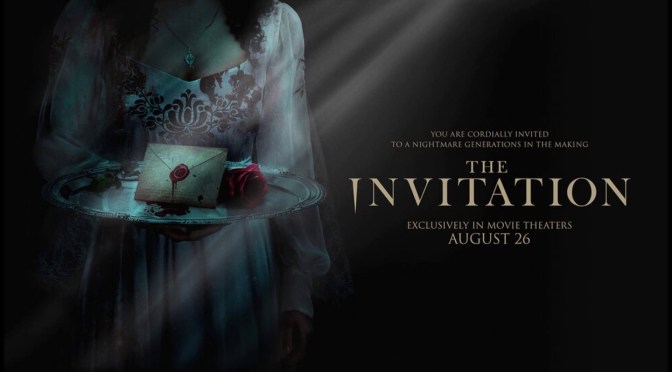
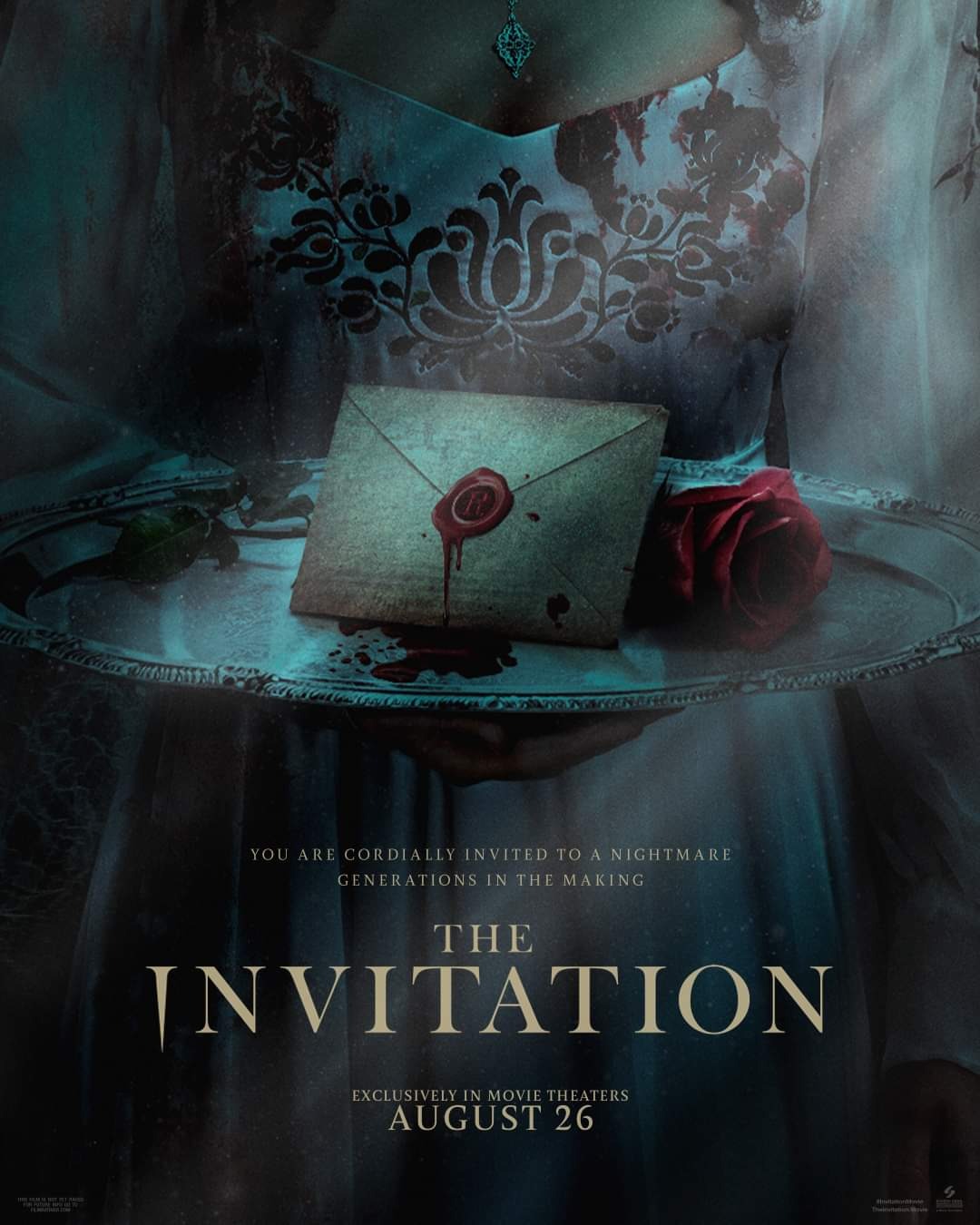
Sony (2022) 104 min. PG-13
Director: Jessica M. Thompson
Screenplay: Blair Butler
Cinematography: Autumn Eakin; Editing: Tom Elkins
Production Design: Felicity Abbott; Set Decorator: Clare Keyte & Zsuzsi Sipos; Costumes: Danielle Knox; Score: Dara Taylor
Stars: Nathalie Emmanuel (Evelyn “Evie” Jackson), Thomas Doherty (Walter de Ville), Hugh Skinner (Oliver Alexander), Stephanie Corneliussen (Viktoria), Alana Boden (Lucy), Courtney Taylor (Grace), Carol Ann Crawford (Mrs. Swift), Sean Pertwee (Mr. Renfield), Ian Lindsay (Uncle Alfred), Scott Alexander Young (Uncle Julius), Elizabeth Counsell (Mina Harker), Jeremy Wheeler (Jonathan Harker)
Dismissing The Invitation as just a collection of tired horror clichés, built atop a Jordan Peele-inspired stab at social relevance, like Antebellum, establishment critics appeared to hate this one for the precise same reasons I liked it. With its combination of the comfy, palatial comforts of a cozy mystery by way of Downton Abbey, and the graphic, gory, thrill-a-minute jump scares of modern horror, I thought The Invitation perfectly balanced the best of both worlds, rather than meeting at cross-purposes.
For women who love silver tea sets, Chantilly lace and a bit of Old English, and adrenaline junkie men who need a pulse-pounding fix every few minutes, the mix-and-match afforded by The Invitation might provide for the perfect, old-fashioned date movie. It’s not even ashamed to go full Hammer at times, with heaving bosoms cinched into tight, high, Empire waistlines. It’s an unholy marriage of moody Gothic romance and swoony, bodice ripping Harlequin novels. Directed by Jessica M. Thompson, it’s a very good-looking film, aesthetically pleasing in a plush and tactile way.
The Invitation is scary enough but, apart from the rather unkindly treatment of the hired help, not so much so. It leads us a merry chase for much of the way, making one wonder about the nature of the beast, then leaves us laughing at ourselves by circling back around to the squarest place imaginable, landing at the very same spot we’d been assuring ourselves all along it couldn’t possibly be heading. Wouldn’t possibly dare to. This is the rare movie that ends up satisfying by leaning, full stop, into the cliché, so it’s a dish to come to cold, knowing as little as possible about it beforehand.
Personally, in hindsight, I shouldn’t have been so surprised, given the movie has no more qualms about throwing out its Dracula references with namedrops to Harker and Mina and Lucy and Carfax, than it does any of the other, myriad influences that inspired it. The Invitation is never adverse to displays of respect for those honorable ancestors that begat it. So, while the movie may end up as nothing particularly remarkable, it’s an amusingly entertaining ride; a real hoot. Turning out to be more old school than we first imagine, it’s better fun for all that, a real rarity in this day and age, when the latest is routinely regarded as the greatest, regardless of actual quality.
On the surface one might not see much difference between this movie and something like Ready or Not. But now that Hollywood has (largely thanks to Peele) accepted that audiences will attend genre movies starring non-white leads, it’s the very essence of its black code switching that makes once-told tales like The Invitation fascinating again. They appear to be the only way modern films, predicated on sequels, reboots and franchises, have of providing different and unique perspectives anymore. The novel edge allows filmmakers to squeeze the last bit of juice out of their warmed-over material. Almost in spite of itself, the non-traditional casting choices impart tinges of social commentary that have rarely been introduced into the genre before, much less made to feel integral to it.
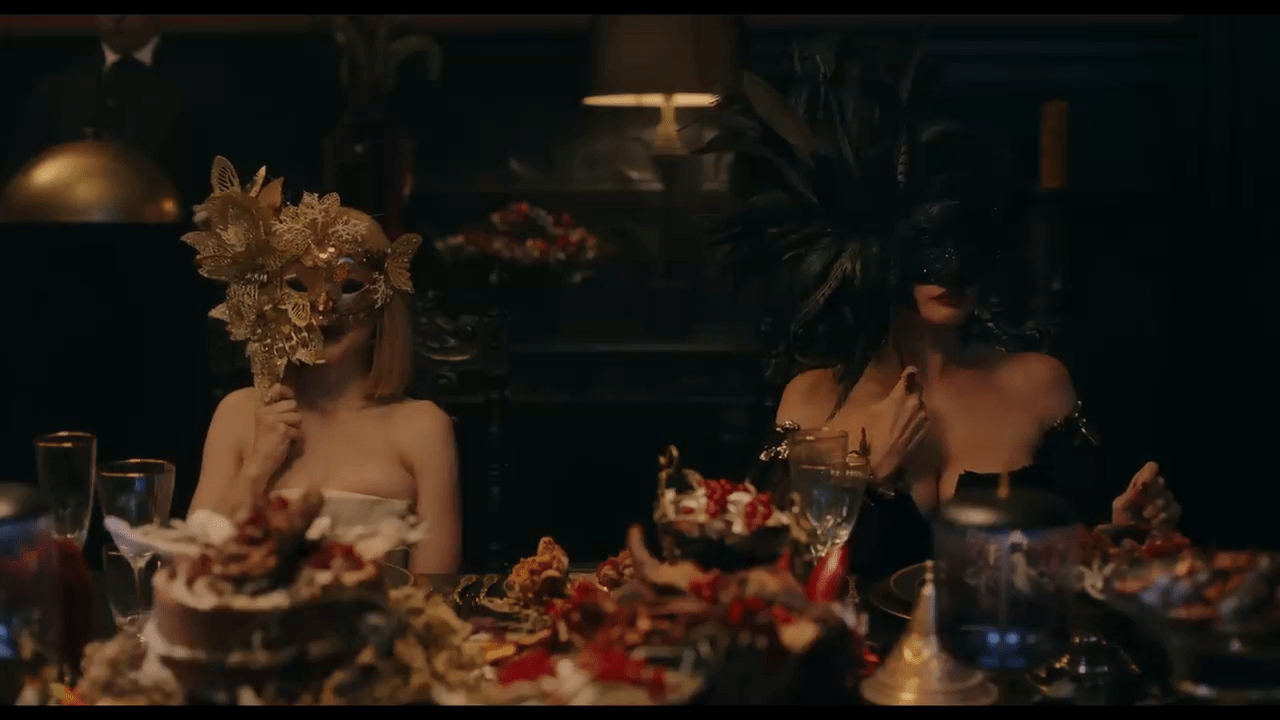
Finding there’s an English branch of her family she never knew existed, American Evie is cordially invited to fly over and stay with them for the wedding of a distant cousin. And the first thing she gushes when clapping eyes on the impressive bag of stones comprising the ancestral estate where she’ll be staying, Carfax Abbey (with cutaways that make it resemble a miniature dollhouse – if with some of the worst electric wiring imaginable) is, “Are they royalty?” But these devilish little de Villes, with their sights set on passing along their Satanic genes, Rosemary’s Baby-style, at a masked, Eyes Wide Shut, Mardis Gras affair, end up representing a far more ancient lineage than the one she initially imagines.
If anything, I think, The Invitation was likely inspired by the, shall we say, strong feelings stirred up among traditional royal watchers over the marriage of Prince Harry to Meghan Markle, a rare black princess fantasy for little girls to dream about. While Evie claims, “I can’t wait to see the wedding of the century,” Teddy Sinclair’s song, which plays over the closing credits, includes lyrics like, “Hey, Mr. Badman, gimme that crown/I’m the king and the queen and I don’t quit…” It’s beyond simple chance. The ongoing hornet’s nest kicked up among otherwise seemingly civil monarchists over such a bastion of traditional conservativism like the British royal family accepting a black American expatriate into their bosom, especially in the midst of the nationalistic Brexit movement, was revealing. “You think you can change thousands of years (of tradition) just like that?” Evie is likewise accused when she tries to buck the system here (“You get back in line!”). And the words, almost despite themselves, have real world reverberations.
Just as Stoker’s Dracula itself reflected the late Victorian fear over the (largely Jewish) foreign hordes then inundating British shores to escape pograms and persecution in other lands, The Invitation seeks to explore the modern nationalist outcroppings of these same feelings, only from the perspective of the outsider in this situation. The Invitation toys with the premise, using it to thread in many associated emotional resonances, about being of peasant stock among the gilded aristocracy, about not feeling that one really fits in, and the importance of being given a sense of belonging. The movie establishes a particularly heady, hoity toity atmosphere inherently intended to make the historically disenfranchised feel more socially undesirable, and out of their element. “I told master you were subpar the moment he mentioned you. That you were so beneath our standards.” Evie is assured. “You’re not one of us. You’re a halfling.” But that’s precisely what gives her the strength to keep hold of her human soul at film’s end, while all the full bloods go to the devil. Just as the more emphatic title of Get Out suggested the possibility of rejection and ejection from home, being forced to flee from the premises, The Invitation itself places vampiric associations in our mind concerning having to be invited in, extended a graven invitation before a blood sucker can be made to feel welcome. Additionally, of course, this notion of being an uninvited guest made to feel you’re trespassing on the premises, is also meant to peripherally touch on the notion of integration into exclusive, gated communities historically not of color. The ancestral fear constantly gnawing at the back of Evie’s mind here, is that she could be run out of this sundown town by the angry lynch mob to hand, baying for blood. When she finds Walt’s been checking up on her before inviting her into his home, she assumes it was a background check for a criminal record. And the old couple she flees to for help during her flight, initially assume she’s there to rob them.
This sense Evie gets, as the lone black sheep among an all-white flock, a frequent experience for minorities in a predominantly white society, is the same common one that was exploited in Get Out, serving as that movie’s main fount of inspiration. Those comically uncomfortable scenes of Daniel Kaluuya stranded among the overcompensating, upscale suburban WASPs, painfully trying to demonstrate how hip they were with black folk and culture, has been ratcheted up to critical mass by being reset among the benignly color blind and curiously accepting English gentry here. Like most of the films that have followed Get Out‘s watershed success, The Invitation openly expounds on its debt to Peele, and comes complete with a funny friend, Grace (Courtney Taylor), on the phone like Lil Rel Howery, to which Evie can send back dispatches from the frontlines concerning all the odd things happening around her. Though, for some reason, Taylor’s character is permitted to disappear at the height of the high weirdness, when her leavening humor is most needed, even after she’s proven herself dead right about Evie being catfished. There’s even a strangely committed, single-minded wait staff here that seems disconcertingly ‘off.’
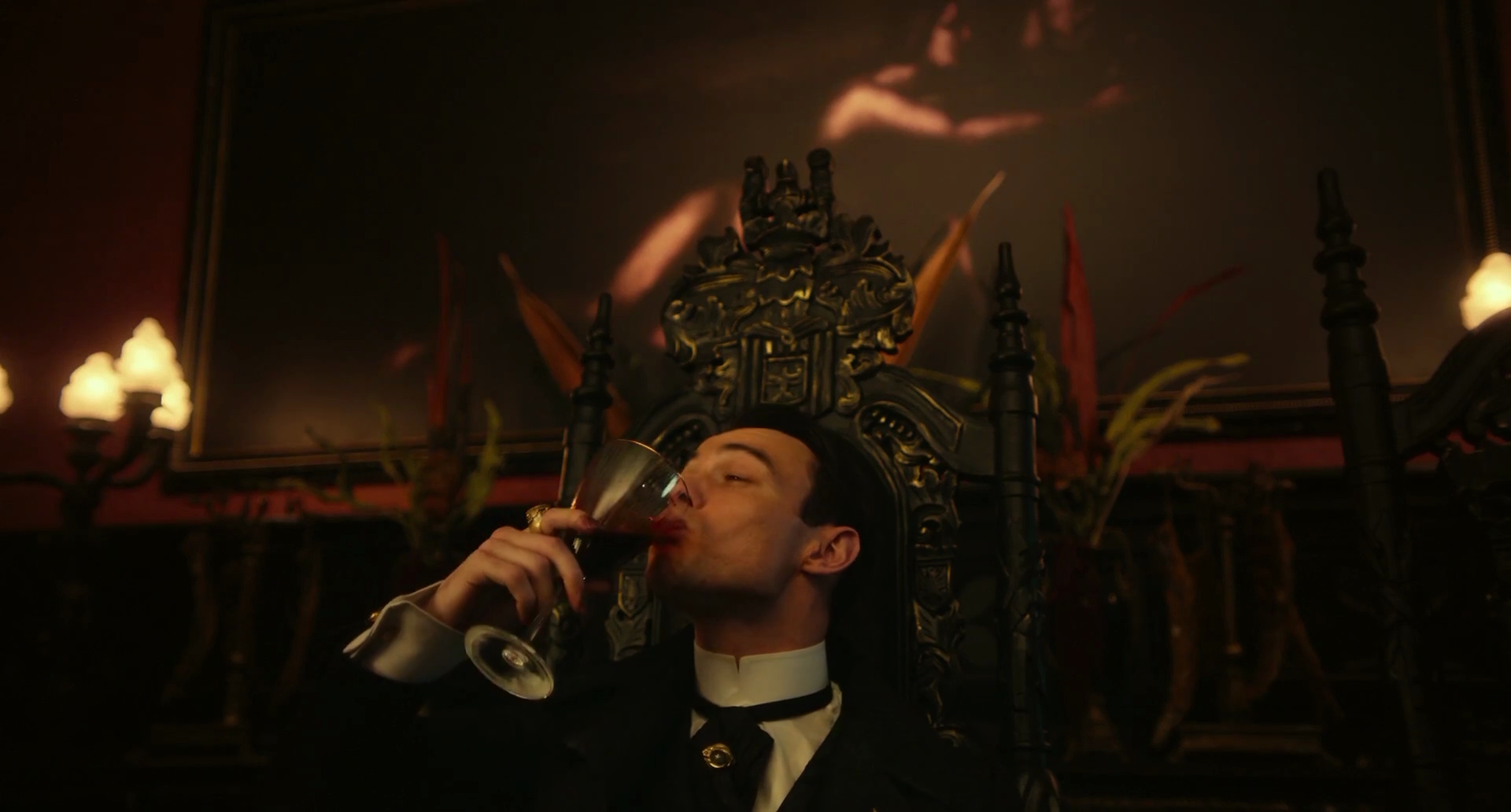
The inferiority complex this black commoner must constantly fight an uphill battle against, of essentially feeling not good enough, as if she were an unworthy transgressor among her betters, has ties that stretch back into such familiar Gothic romances as Rebecca and Jane Eyre. An Ancestry.com-like DNA kit proves her entrée into this retrofitted Cinderella fantasy (“Did your girl turn into a pumpkin?”). And it’s here where the sensitivities and sensibilities of the female director and writer, and the surprisingly strong and supportive, female-centered cast, become most apparent. The mysterious dark, brooding, master of the manor here would seem just at home signing his name as Rochester or DeWinter, instead of de ville, to the monogrammed notes he’s constantly leaving about, given all manner of horrors we find squirreled away in his attic. We sense he’s a very old soul, since this lord who appears to be Evie’s own age (“You’d think he’d be a hundred years old, but he’s our age.”) is said to despise technology. But what’s the fun of living forever if you can’t play with all the new toys? Certainly this doesn’t square with the dossier he’s had compiled from online research about Evie. He appears quite at home surfing the net, even if in this roundabout way. Yet, one must admit that he speaks sense when he says his reprehensible actions aren’t much different from the same sort of Google search we all do on people we meet, and are interested in finding out more about, by tracing their digital footprint. (“Given the opportunity, we’d all snoop. Read their diaries, texts, e-mails. Can’t help it. It’s in our nature.”). As Walter de Ville, Thomas Doherty delights in fully reveling in his wickedness. With his dopey smile, he seems to be having the time of his life being bad. The spot-on references to him as a son of the devil may explain the whispered incantations that appear to accompany the first two kills, like satanic verses (is it Romanian?). As the movie tries to gaslight us, much as Walt does Evie, we ponder whether we’re imagining things, or if his ears really are shifting into pointy edges, as he delivers his angsty monologues. He ends up revealing talons that need manicured far more than Evie’s nails
Leading lady Nathalie Emmanuel, who will be fondly remembered by many as Missandei from HBO’s Game of Thrones, is talented and appealing enough, but appears to have been cast here primarily so the camera could play off her slight resemblance to Meghan Markle. She sports a T-shirt promoting a rival network, Showtime’s long-running series Outlander, in which another liberated woman (“I like my independence.”) found herself pulled back in time into an earlier age, where her modern freethinking ways were set at odds with accepted ceremony and tradition, shocking the stockings off locals and turning society on its head. The Invitation plays into this same fundamental cottagecore fantasy that many, otherwise modern-minded, women can be found dabbling in online, finding it relaxing to project themselves into the romantic lifestyle of an earlier, and (implicitly) more stress-free time. This sort of fantasy has always been problematic for minorities though, who wouldn’t have enjoyed anywhere near the same degree of free agency as other groups of people during those periods in history. A fact that becomes patently obvious when discussion turns to Evie’s black ancestors. It also suggests the systemic sins of a historical past that remains very much with us in the present day. Rather than magically ending with the opening suicide (“It all ends here.”), the past proves prologue, as the similar, cyclical nature of Evie’s attempted escape demonstrates. Ensconced in this ancestral manor which, like its inhabitants, appears to have changed little over time, Evie struggles with her own sense of identity and proper place among her apparent people (“… a sense of family, a sense of belonging, and for the sense of purpose that comes from knowing who you are.”). Especially in light of her forebears’ disreputable reputation, which keeps being held up and thrown in her face. And when all Walt’s deferential acolytes start ‘innocently’ encouraging her to refer to him as her lord and master, such presumptuousness must seem all the more galling to her. As she incredulously observes, “Can you imagine being that rich? Just walking around like you own people?” Only to have the spot-on Grace affirm, “Girl, he probably does own people. Wanted to add you to the roster.” It’s this insufferable sense of Anglo-Saxon superiority that ruffles the feathers of black folk like Evie. These vamps consider themselves the next step up in human evolution (“I am a god!”), as outlined in the devil’s bargain Walter tries to get her to agree to: “Think about what you are gaining here. Wealth, power, great strength, life eternal. No more sickness, like your mother had. No struggle, no longer confined by the frailty of human existence. A life of privilege…. Isn’t that what you want?”
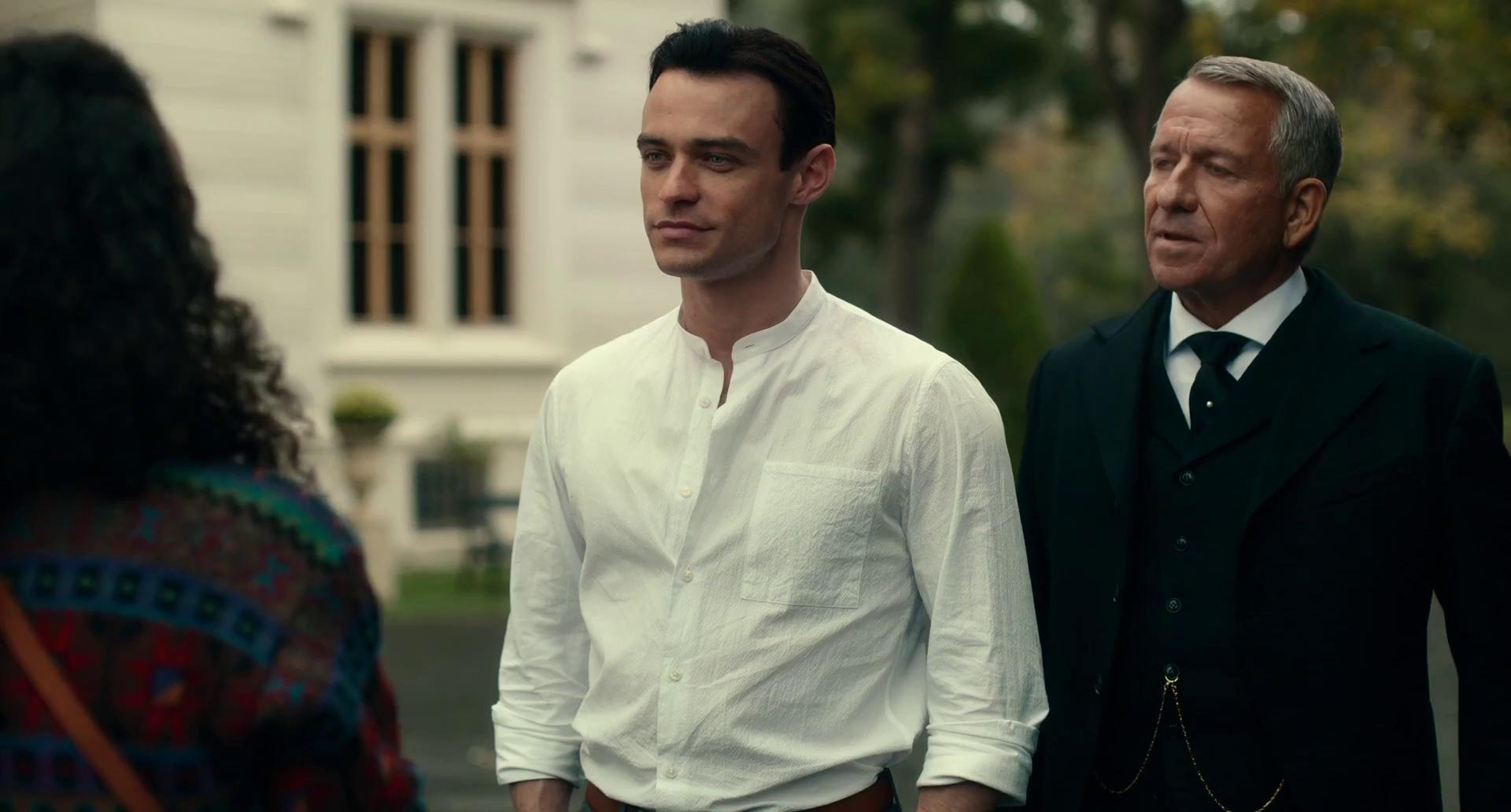
Which is why Evie feels greater affinity with the serving staff when she first arrives, including Carol Ann Crawford’s Judi Dench-like Mrs. Swift, than she does the overlords of the estate. With her own current catering career, and given her people’s ancestral history as domestics and caregivers, maids and mammies, in Western society, Evie’s seemingly the only person with the empathy to see how badly the staff is being treated by Sean Pertwee’s lordly upper butler, Mr. Renfield, who drills them like a martinet, the way Christopher Plummer did his children in The Sound of Music. He likewise disrespects her initially, before discovering she’s a guest for the weekend, rather than another server, as he’d first assumed, based on her skin tone. The immediate bond Evie forms with the help (“If we don’t help each other out, who will, right?”) recalls Kaluuya’s own in Get Out, the gardener and maid there being the only other blacks in the vicinity he felt a connection to. In The Invitation, this bond is made explicit when Walt assures Evie, “For someone of your… background, surely (unholy matrimony to him) is more than a leg up,” before sinking his teeth into the fibula of the helpless maid right beside her.
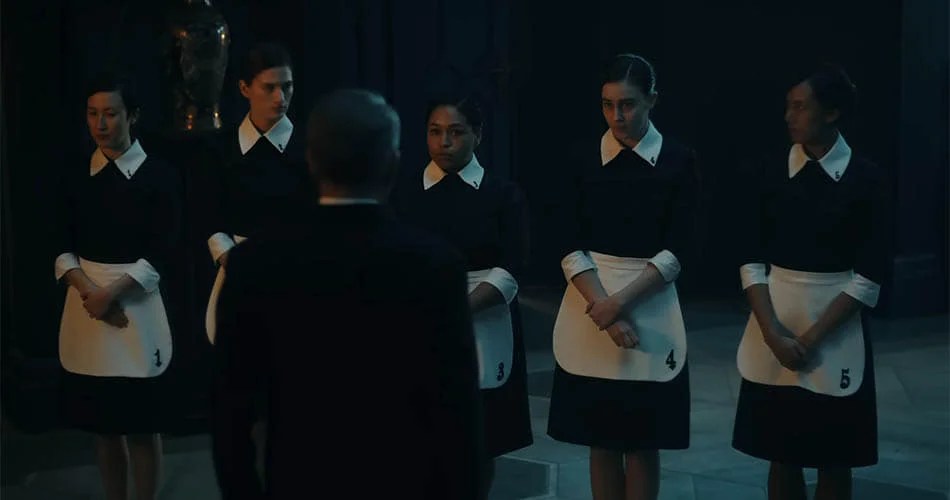
To underline the point, the maids here appear to have been specifically cast to represent a cross section of ethnic types. Like Evie herself, this makes them seem equally suggestive of a threatening outside influx, an uptick in unwanted immigration to British shores. As such, they’re also regarded as low-skilled labor to be exploited by companies who can get away with paying them under the table at minuscule wages. In anti-Capitalist propaganda, the titled and aristocratic are frequently depicted as literal bloodsuckers, subsisting off the labor of the proletariat class as if they were beasts of burden. They’re drained to the last drop of their blood, sweat and tears, same as other exploited groups historically have been. And when their bodies are broken by their backbreaking labor and can serve no further purpose, they’re led to the slaughter, like the draught horse on Animal Farm. So, it’s just a slight leap to depict these aristocrats as literally feeding off the help, as they do here. The Invitation seems intent on reviving our oldest fears about decadent, debauched and decaying Old World aristocracies.
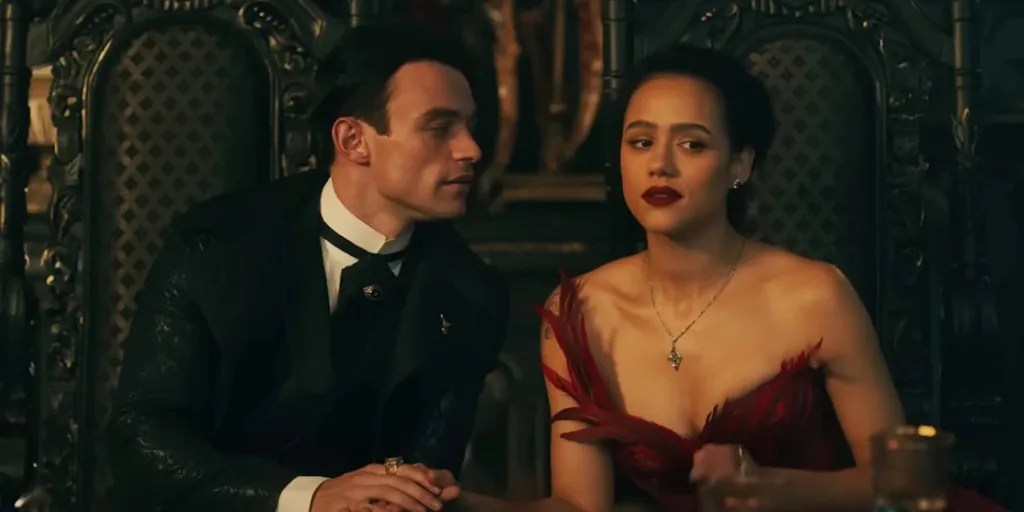
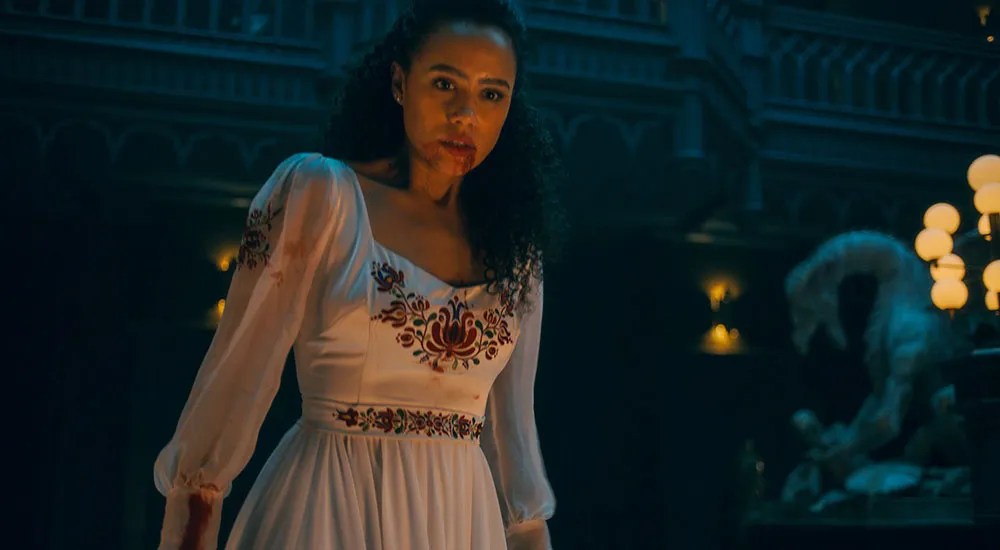
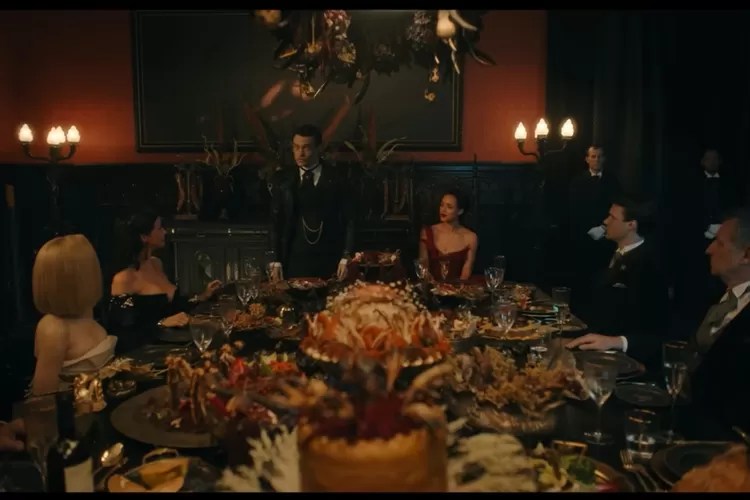
The targeted waitstaff here is shown to be literal prey, blood offerings to sate the dark lord, keeping him well fed, their blood slowly drained to service the needs of their self-indulgent masters. Who, once they’ve drunk their fill, leave the exsanguinated victims stacked in the ice house like cord wood for sloppy seconds. In that glorious red feather dress she wears to her betrothal dinner, Evie herself underlines this demarcation between predator and prey. In her fanning peacock finery, she resembles another pheasant, like the ones those grandly attired lords and ladies wolf down like pigs at a trough, their true animal natures peeking through all the pomp and circumstance, as in that scene of 17th century aristocracy from Neil Jordan’s The Company of Wolves (1984). They consume the spread ravenously, swallowing without even chewing first, like a lampoon from some Soviet agitprop of the ‘30s. To Evie, the sight is grotesque and hallucinogenic, the way innocent new bride Mariette Hartley’s saw her lurid wedding night in Ride the High Country.
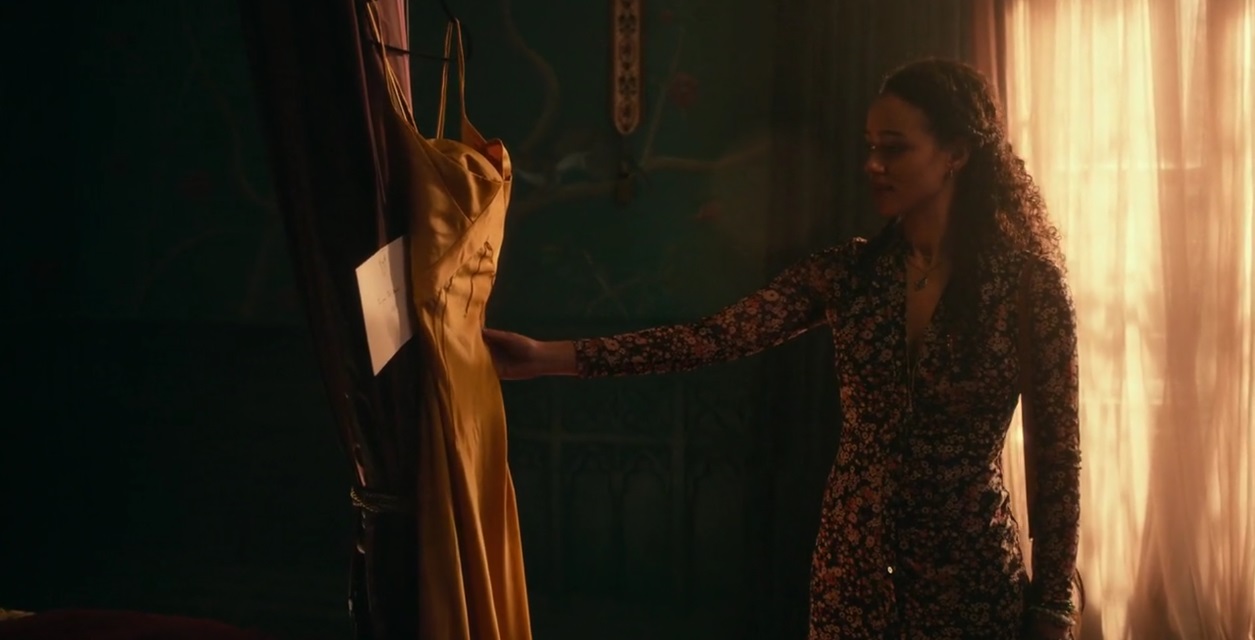
Like the waitstaff, Evie herself represents a melding of several different racial and national identities intended to make ethnic purists uncomfortable. For instance, she’s wearing a backless Beauty and the Beast gold dress gifted her by ‘Walt,’ when she makes her dramatic entrance at the reception. And with her hair styled to the side and an ornamental nose ring in place, she seems purposely done up like a Hindu bride from New Delhi, appropriating the culture to acknowledge the earlier waves of Indian immigration to Britain. To the aged aristocracy, Evie, all ‘sparkly and new,’ seems quite ‘refreshing.’ She presents the prospect of dragging these staunch traditionalists, kicking and screaming, into the 21st century, much as her character is meant to be injecting new blood, literally and figuratively, into their ancient line by presenting the prospect of becoming a breeding vessel (“With so many boys, we thought we were done for.”).
‘Out with the old, in with the new.’ Unfortunately, the nourishing new wellspring to be tapped that she represents, also evokes the indigenous lands her ancestors originally hailed from. Those lands that were likewise exploited and raped by imperialists and colonialists of the natural resources they had to offer (“They’re racked with colonial guilt… leopards don’t usually change their spots.”). So, by the time incendiary firebrand Evie is demonstrating her Matrix-style upswoops, it all seems to the purpose of pulling down the historic pillars of aristocratic privilege that have been holding her people in bondage for millennia. Symbolically, she’s burning to the ground the past she’s chained to, insubordinately pursuing a scorched earth policy, like Kerry Washington at the end of Django Unchained (“I hope you all burn.”). Proving you just can’t take black folk nowhere.
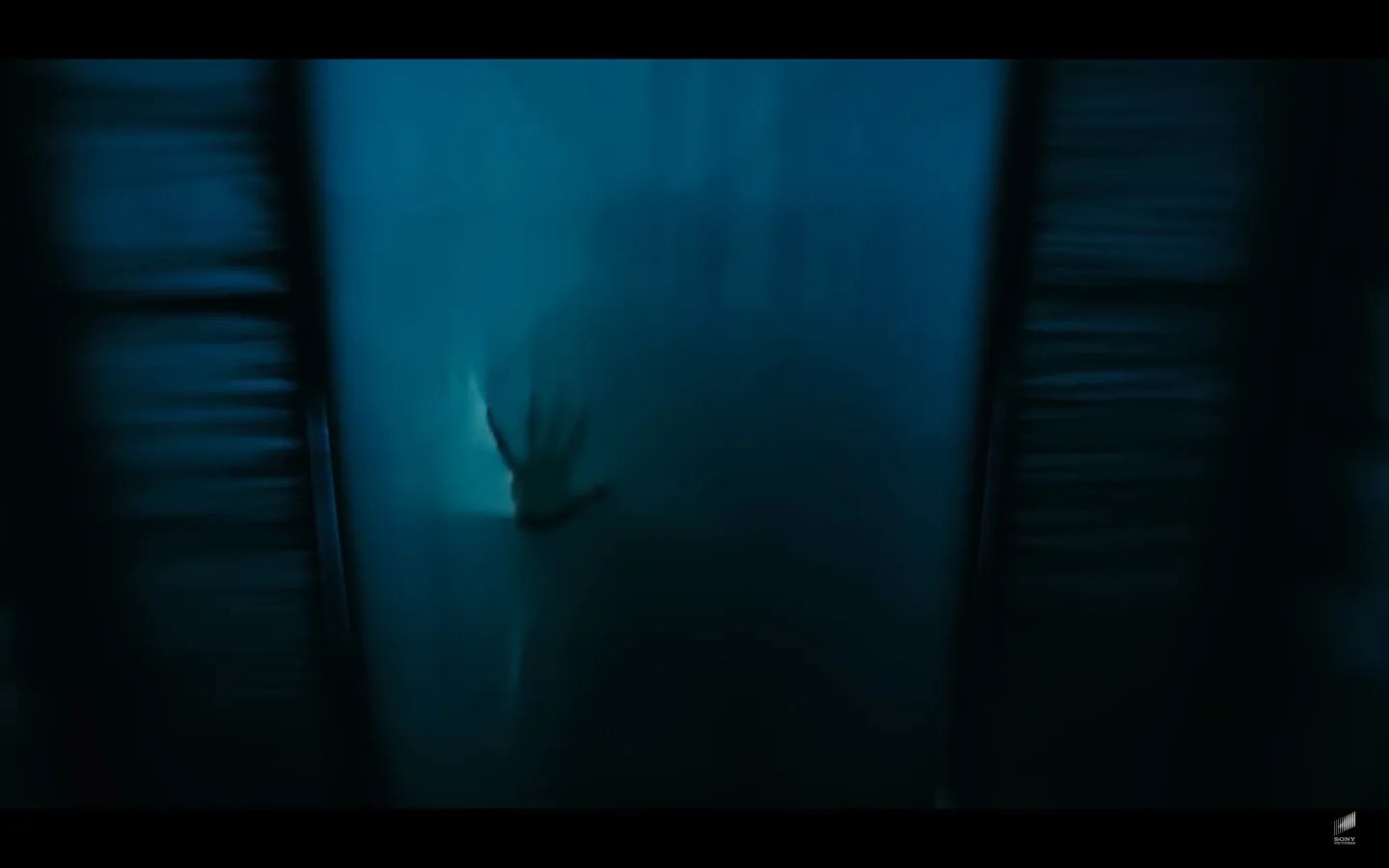
Dribbled on top of it all, there are the disembodied arms and appendages from The Conjuring and The Apparition, clapping on and off, ghostly apparitions and jump scares aplenty. Just to provide the requisite quota of starts the screenwriter’s more sedate story wasn’t properly structured for, one too many of these wrap up with the lead waking from nightmares, that prove none of what we saw was real. There are two (count ‘em) virgin sacrifice scenes, with comely maidens selected from a queued line, being sent to clean dark, dank dungeon-like parts of the house, that are staged in a rather repetitive manner, and end almost identically. And the offing of the first maid, while wearing earbuds so she can’t hear the beast approaching from behind, for some reason, directly recalls the attack on that Walkman-wearing, convenience store clerk in J.J. Abram’s Super 8. The only compelling aspect to be had from any of this is the clever way the monster we only see in fits and starts, becomes suggestive of that enormous stone dragon statue decorating the foyer. In addition, realtor Oliver Alexander (played by Hugh Skinner as the proverbial, silly English ass) seems to be positioned in the Renfield role initially, procuring victims for the master. But then to confuse the issue, we’re introduced to the butler, literally named Renfield.
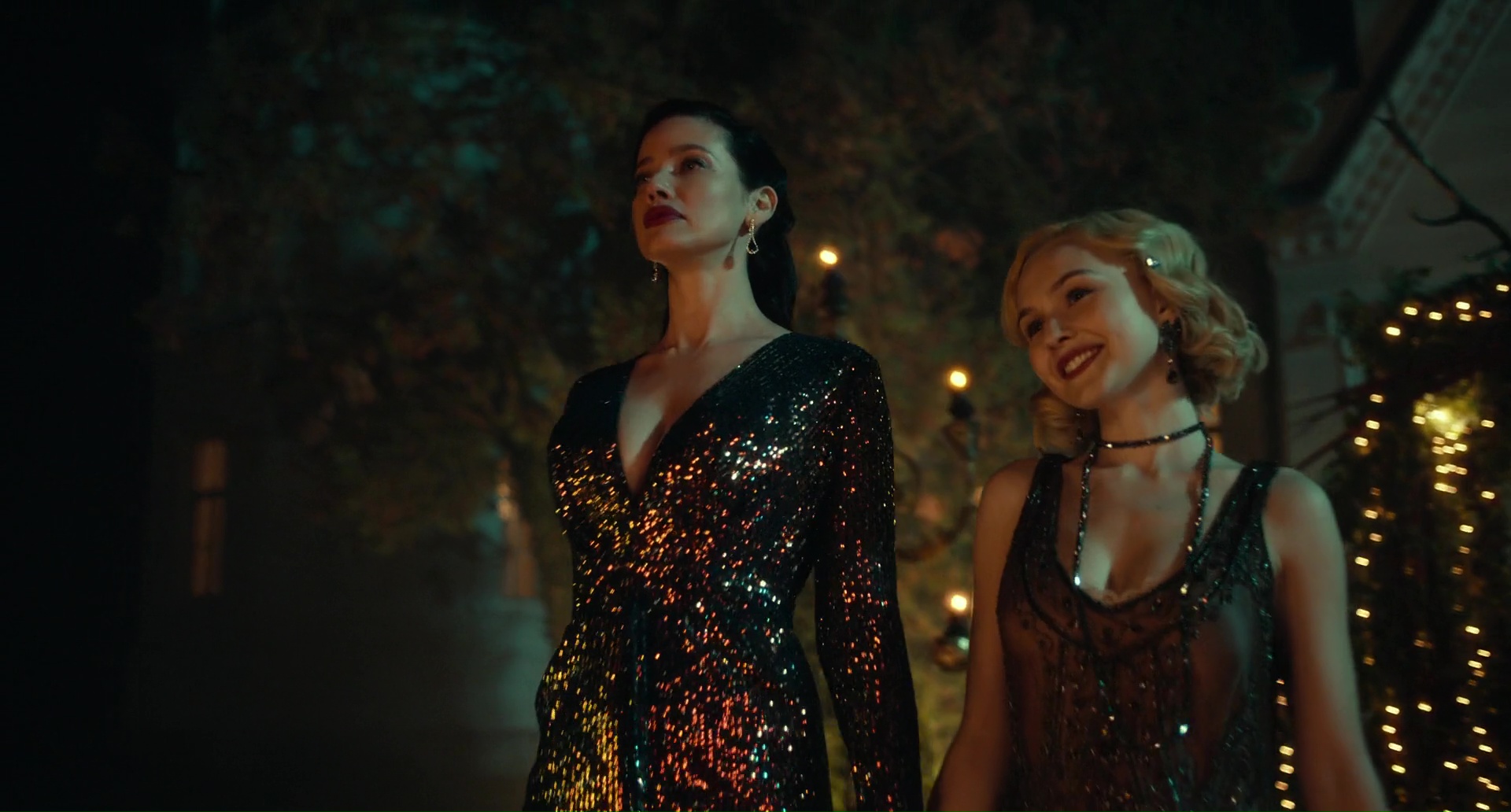
Another scene that’s clearly signaled and prepared for, never comes to pass at all. Learning that Evie makes ceramics, we keep waiting for a reworking of that iconic pottery bit from Ghost to somehow worm its way into proceedings. But we’re just set up for disappointment. And with all the talk about those carnivorous shrikes, birds that actually impale their prey on thorns, the obvious correlation that seems to be intended, with killing vampires with wooden stakes, is never made explicit. Not even at the end when Alana Boden’s agreeably chirpy, little blond Lucy impales both herself and Stephanie Corneliussen’s nasty, tall, dark Viktoria simultaneously, the two women going together, after the story has tried to reconstitute Dracula’s trio of brides from Stoker’s original. I guess after Nicholas Hoult’s Renfield went on to reimagine the character as a basket case trying to break free of his co-dependent relationship, it shouldn’t seem too outlandish that The Invitation cast its harem in terms of feminist self-realization, with Evie balking at the thought of being relegated to the third wheel of a throuple (“Three perfect little dolls for the master.”), instead opting for the van Helsing route. The relationship between Evie and self-assertive Grace, in which one always seems to have been shunted into the subsidiary role of the dominant partner’s sidekick, at least until the roles are reversed at the end, isn’t satisfactorily fleshed out either. Though it seems meant to mirror, to some degree, the similar power dynamics between Lucy and Viktoria (“It’s enough. You don’t tell me what to do anymore!”).
Perhaps most annoyingly, after the ball has dropped, and the entire game’s been given away, it sounds absurd to keep having Evie ask Walt who he is and what’s going on, as if she’d never seen a vampire movie or celebrated Halloween in her life (she’s from across the pond, so there’s no excuse). These foolish lines make this independent-minded, contemporary working girl (“You modern women are so ungrateful,” her dark prince hilariously bemoans), sound like she were some illiterate peasant from the old country herself. From even further back in time maybe, before his invasive new species had ever immigrated over. And while it bodes ill to dwell on dismal plot points, I don’t entirely get the mechanics of her grand plan at the end. Being dead, Walt can’t regenerate his own blood. It’s just recycled from who or whatever he was feeding off the night before, like a water filtration system. So what affords it magical properties? This is probably a question more for Stoker’s original though, where he had Mina gain extrasensory perception from drinking Dracula’s blood. So, I’m sure someone has explained the logic of this somewhere… at some point? The only thing that emerges clearly from such amorphous issues, is that the eternally amusing Walt is enjoying his overeager young bride sucking him dry far more than he ought to be at the end there.

 Sony (2022) 104 min. PG-13
Director: Jessica M. Thompson
Screenplay: Blair Butler
Cinematography: Autumn Eakin; Editing: Tom Elkins
Production Design: Felicity Abbott; Set Decorator: Clare Keyte & Zsuzsi Sipos; Costumes: Danielle Knox; Score: Dara Taylor
Stars: Nathalie Emmanuel (Evelyn “Evie” Jackson), Thomas Doherty (Walter de Ville), Hugh Skinner (Oliver Alexander), Stephanie Corneliussen (Viktoria), Alana Boden (Lucy), Courtney Taylor (Grace), Carol Ann Crawford (Mrs. Swift), Sean Pertwee (Mr. Renfield), Ian Lindsay (Uncle Alfred), Scott Alexander Young (Uncle Julius), Elizabeth Counsell (Mina Harker), Jeremy Wheeler (Jonathan Harker)
Sony (2022) 104 min. PG-13
Director: Jessica M. Thompson
Screenplay: Blair Butler
Cinematography: Autumn Eakin; Editing: Tom Elkins
Production Design: Felicity Abbott; Set Decorator: Clare Keyte & Zsuzsi Sipos; Costumes: Danielle Knox; Score: Dara Taylor
Stars: Nathalie Emmanuel (Evelyn “Evie” Jackson), Thomas Doherty (Walter de Ville), Hugh Skinner (Oliver Alexander), Stephanie Corneliussen (Viktoria), Alana Boden (Lucy), Courtney Taylor (Grace), Carol Ann Crawford (Mrs. Swift), Sean Pertwee (Mr. Renfield), Ian Lindsay (Uncle Alfred), Scott Alexander Young (Uncle Julius), Elizabeth Counsell (Mina Harker), Jeremy Wheeler (Jonathan Harker)
 Dismissing The Invitation as just a collection of tired horror clichés, built atop a Jordan Peele-inspired stab at social relevance, like Antebellum, establishment critics appeared to hate this one for the precise same reasons I liked it. With its combination of the comfy, palatial comforts of a cozy mystery by way of Downton Abbey, and the graphic, gory, thrill-a-minute jump scares of modern horror, I thought The Invitation perfectly balanced the best of both worlds, rather than meeting at cross-purposes.
 For women who love silver tea sets, Chantilly lace and a bit of Old English, and adrenaline junkie men who need a pulse-pounding fix every few minutes, the mix-and-match afforded by The Invitation might provide for the perfect, old-fashioned date movie. It’s not even ashamed to go full Hammer at times, with heaving bosoms cinched into tight, high, Empire waistlines. It’s an unholy marriage of moody Gothic romance and swoony, bodice ripping Harlequin novels. Directed by Jessica M. Thompson, it’s a very good-looking film, aesthetically pleasing in a plush and tactile way.
 The Invitation is scary enough but, apart from the rather unkindly treatment of the hired help, not so much so. It leads us a merry chase for much of the way, making one wonder about the nature of the beast, then leaves us laughing at ourselves by circling back around to the squarest place imaginable, landing at the very same spot we’d been assuring ourselves all along it couldn’t possibly be heading. Wouldn’t possibly dare to. This is the rare movie that ends up satisfying by leaning, full stop, into the cliché, so it’s a dish to come to cold, knowing as little as possible about it beforehand.
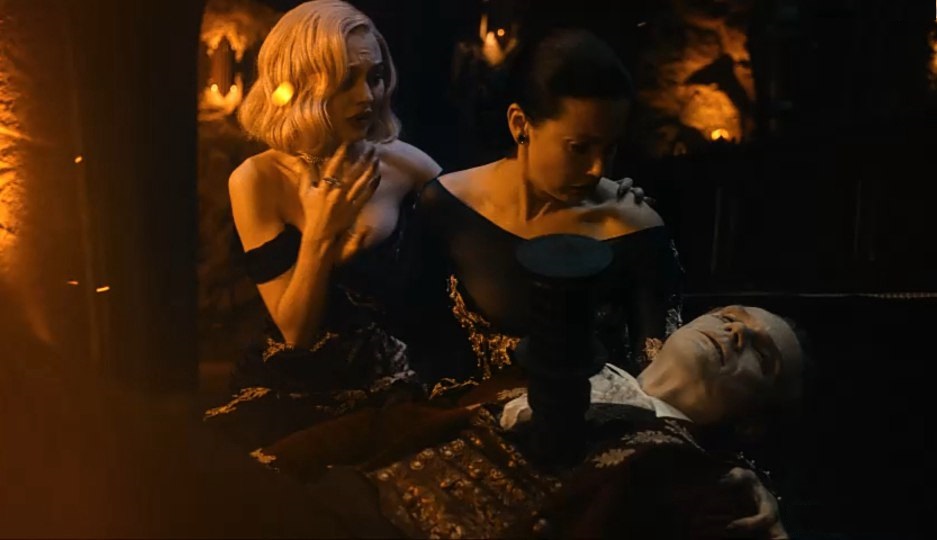 Personally, in hindsight, I shouldn’t have been so surprised, given the movie has no more qualms about throwing out its Dracula references with namedrops to Harker and Mina and Lucy and Carfax, than it does any of the other, myriad influences that inspired it. The Invitation is never adverse to displays of respect for those honorable ancestors that begat it. So, while the movie may end up as nothing particularly remarkable, it’s an amusingly entertaining ride; a real hoot. Turning out to be more old school than we first imagine, it’s better fun for all that, a real rarity in this day and age, when the latest is routinely regarded as the greatest, regardless of actual quality.
 On the surface one might not see much difference between this movie and something like Ready or Not. But now that Hollywood has (largely thanks to Peele) accepted that audiences will attend genre movies starring non-white leads, it’s the very essence of its black code switching that makes once-told tales like The Invitation fascinating again. They appear to be the only way modern films, predicated on sequels, reboots and franchises, have of providing different and unique perspectives anymore. The novel edge allows filmmakers to squeeze the last bit of juice out of their warmed-over material. Almost in spite of itself, the non-traditional casting choices impart tinges of social commentary that have rarely been introduced into the genre before, much less made to feel integral to it.
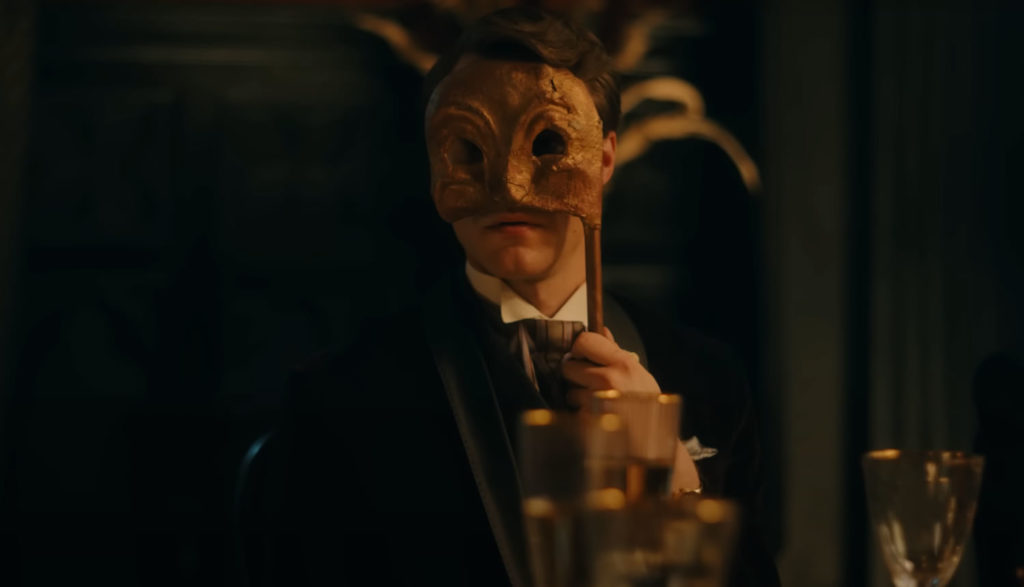 Finding there’s an English branch of her family she never knew existed, American Evie is cordially invited to fly over and stay with them for the wedding of a distant cousin. And the first thing she gushes when clapping eyes on the impressive bag of stones comprising the ancestral estate where she’ll be staying, Carfax Abbey (with cutaways that make it resemble a miniature dollhouse – if with some of the worst electric wiring imaginable) is, “Are they royalty?” But these devilish little de Villes, with their sights set on passing along their Satanic genes, Rosemary’s Baby-style, at a masked, Eyes Wide Shut, Mardis Gras affair, end up representing a far more ancient lineage than the one she initially imagines.
 If anything, I think, The Invitation was likely inspired by the, shall we say, strong feelings stirred up among traditional royal watchers over the marriage of Prince Harry to Meghan Markle, a rare black princess fantasy for little girls to dream about. While Evie claims, “I can’t wait to see the wedding of the century,” Teddy Sinclair’s song, which plays over the closing credits, includes lyrics like, “Hey, Mr. Badman, gimme that crown/I’m the king and the queen and I don’t quit…” It’s beyond simple chance. The ongoing hornet’s nest kicked up among otherwise seemingly civil monarchists over such a bastion of traditional conservativism like the British royal family accepting a black American expatriate into their bosom, especially in the midst of the nationalistic Brexit movement, was revealing. “You think you can change thousands of years (of tradition) just like that?” Evie is likewise accused when she tries to buck the system here (“You get back in line!”). And the words, almost despite themselves, have real world reverberations.
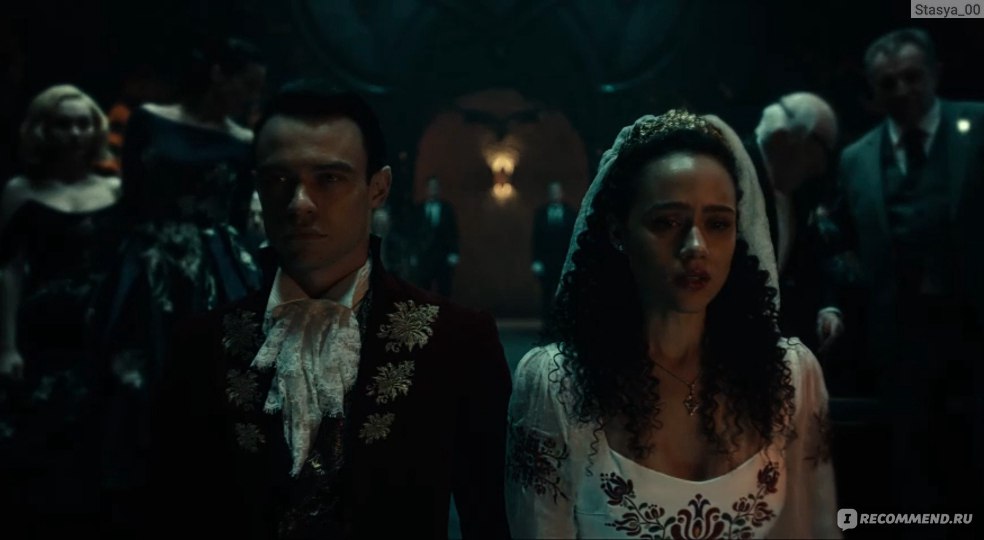 Just as Stoker’s Dracula itself reflected the late Victorian fear over the (largely Jewish) foreign hordes then inundating British shores to escape pograms and persecution in other lands, The Invitation seeks to explore the modern nationalist outcroppings of these same feelings, only from the perspective of the outsider in this situation. The Invitation toys with the premise, using it to thread in many associated emotional resonances, about being of peasant stock among the gilded aristocracy, about not feeling that one really fits in, and the importance of being given a sense of belonging. The movie establishes a particularly heady, hoity toity atmosphere inherently intended to make the historically disenfranchised feel more socially undesirable, and out of their element. “I told master you were subpar the moment he mentioned you. That you were so beneath our standards.” Evie is assured. “You’re not one of us.
 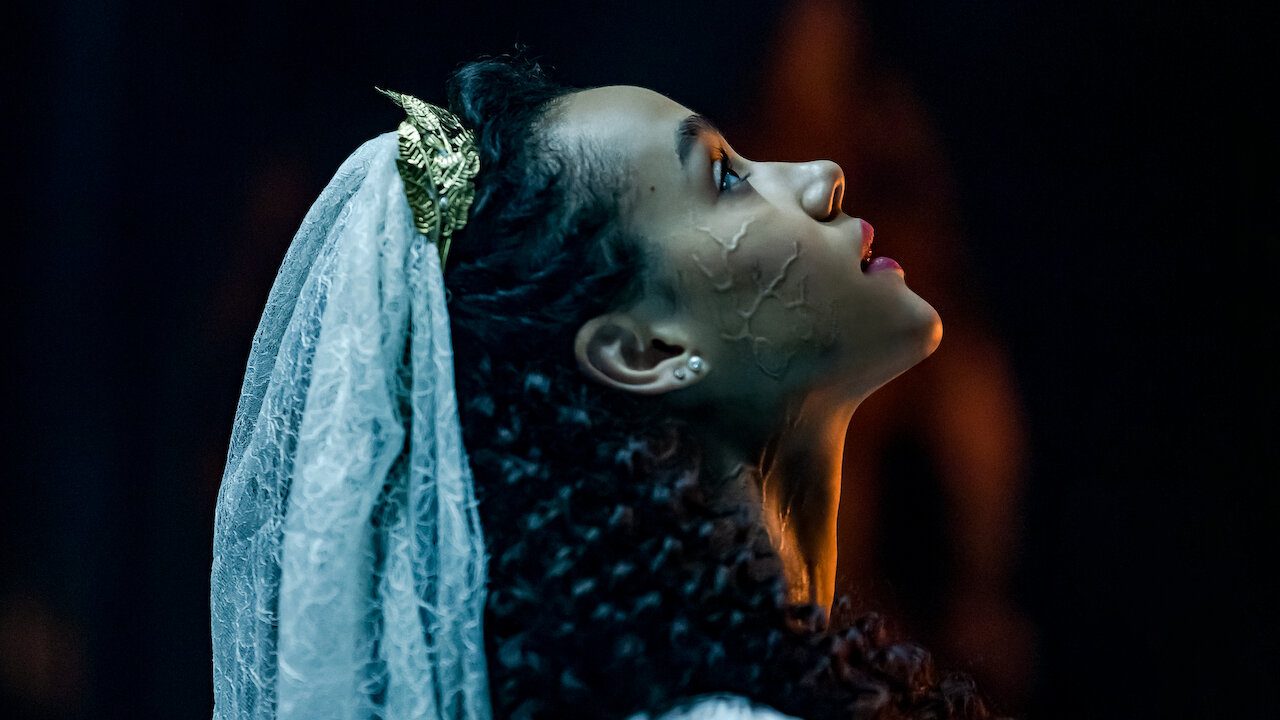 You’re a halfling.” But that’s precisely what gives her the strength to keep hold of her human soul at film’s end, while all the full bloods go to the devil. Just as the more emphatic title of Get Out suggested the possibility of rejection and ejection from home, being forced to flee from the premises, The Invitation itself places vampiric associations in our mind concerning having to be invited in, extended a graven invitation before a blood sucker can be made to feel welcome. Additionally, of course, this notion of being an uninvited guest made to feel you’re trespassing on the premises, is also meant to peripherally touch on the notion of integration into exclusive, gated communities historically not of color. The ancestral fear constantly gnawing at the back of Evie’s mind here, is that she could be run out of this sundown town by the angry lynch mob to hand, baying for blood. When she finds Walt’s been checking up on her before inviting her into his home, she assumes it was a background check for a criminal record. And the old couple she flees to for help during her flight, initially assume she’s there to rob them.
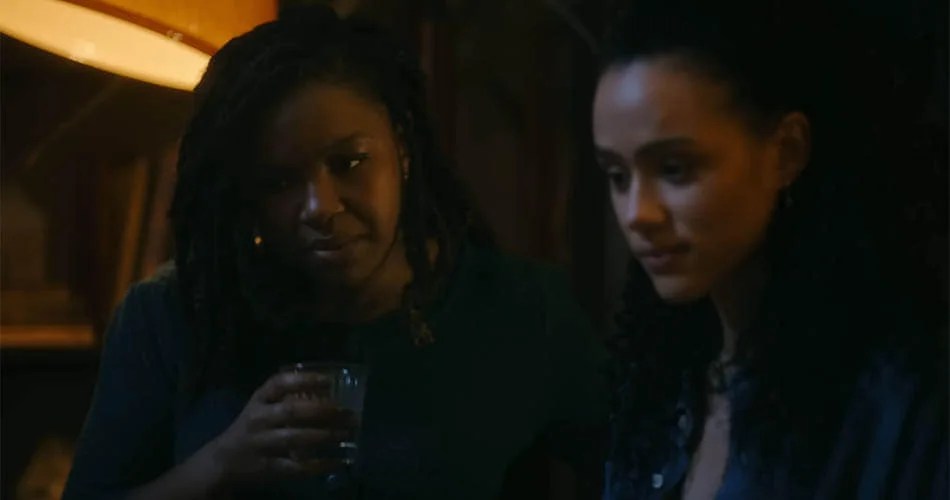 This sense Evie gets, as the lone black sheep among an all-white flock, a frequent experience for minorities in a predominantly white society, is the same common one that was exploited in Get Out, serving as that movie’s main fount of inspiration. Those comically uncomfortable scenes of Daniel Kaluuya stranded among the overcompensating, upscale suburban WASPs, painfully trying to demonstrate how hip they were with black folk and culture, has been ratcheted up to critical mass by being reset among the benignly color blind and curiously accepting English gentry here. Like most of the films that have followed Get Out‘s watershed success, The Invitation openly expounds on its debt to Peele, and comes complete with a funny friend, Grace (Courtney Taylor), on the phone like Lil Rel Howery, to which Evie can send back dispatches from the frontlines concerning all the odd things happening around her. Though, for some reason, Taylor’s character is permitted to disappear at the height of the high weirdness, when her leavening humor is most needed, even after she’s proven herself dead right about Evie being catfished. There’s even a strangely committed, single-minded wait staff here that seems disconcertingly ‘off.’
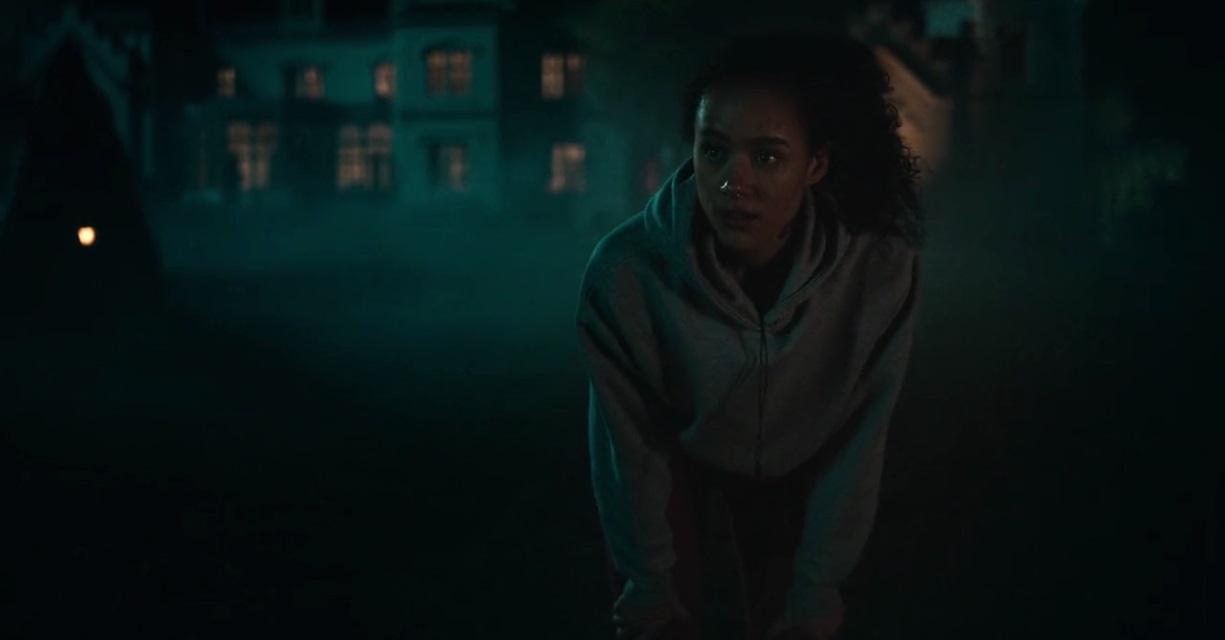 The inferiority complex this black commoner must constantly fight an uphill battle against, of essentially feeling not good enough, as if she were an unworthy transgressor among her betters, has ties that stretch back into such familiar Gothic romances as Rebecca and Jane Eyre. An Ancestry.com-like DNA kit proves her entrée into this retrofitted Cinderella fantasy (“Did your girl turn into a pumpkin?”). And it’s here where the sensitivities and sensibilities of the female director and writer, and the surprisingly strong and supportive, female-centered cast, become most apparent. The mysterious dark, brooding, master of the manor here would seem just at home signing his name as Rochester or DeWinter, instead of de ville, to the monogrammed notes he’s constantly leaving about, given all manner of horrors we find squirreled away in his attic. We sense he’s a very old soul, since this lord who appears to be
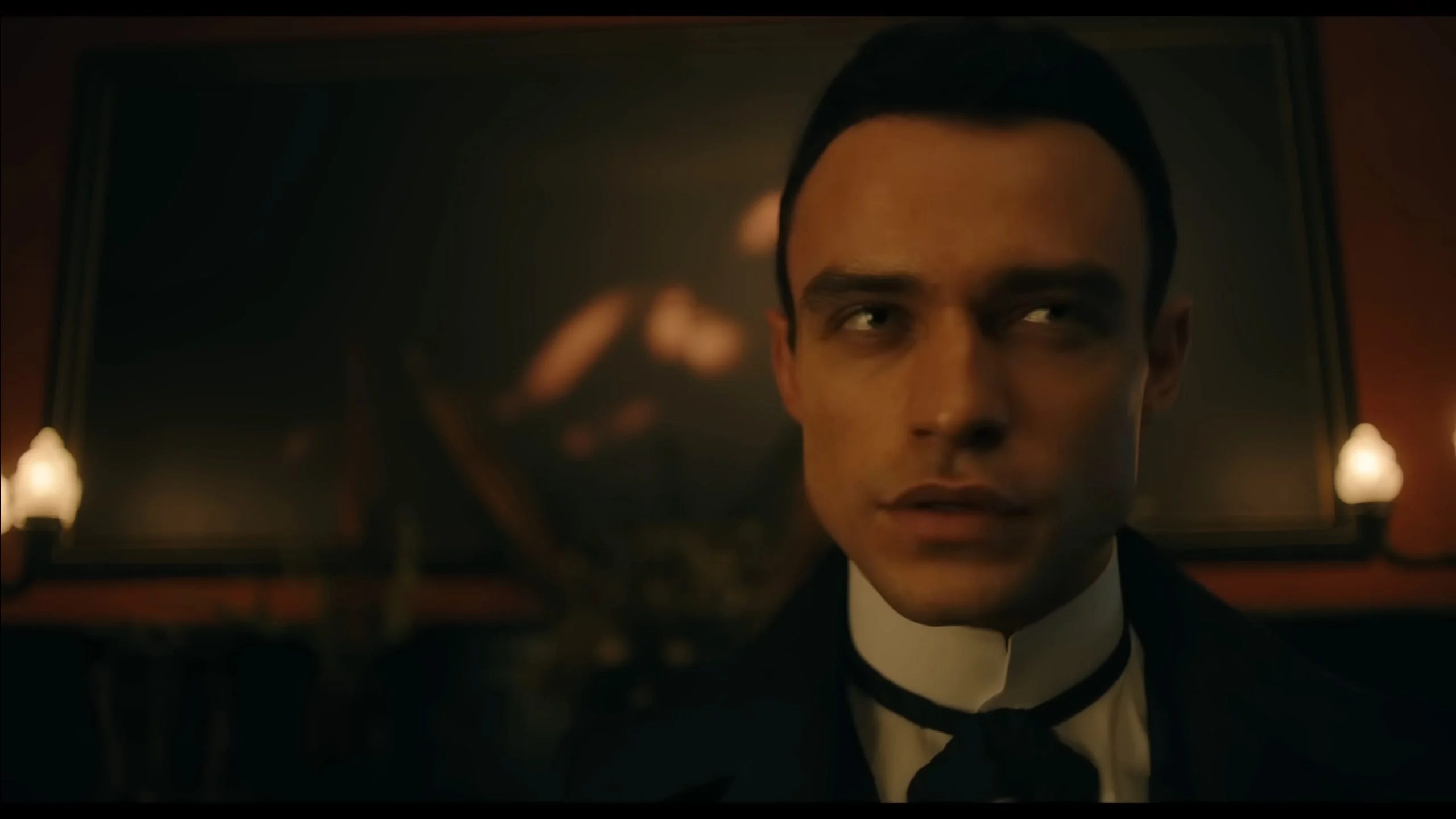 Evie’s own age (“You’d think he’d be a hundred years old, but he’s our age.”) is said to despise technology. But what’s the fun of living forever if you can’t play with all the new toys? Certainly this doesn’t square with the dossier he’s had compiled from online research about Evie. He appears quite at home surfing the net, even if in this roundabout way. Yet, one must admit that he speaks sense when he says his reprehensible actions aren’t much different from the same sort of Google search we all do on people we meet, and are interested in finding out more about, by tracing their digital footprint. (“Given the opportunity, we’d all snoop. Read their diaries, texts, e-mails. Can’t help it. It’s in our nature.”). As Walter de Ville, Thomas Doherty delights in fully reveling in his wickedness. With his dopey smile, he seems to be having the time of his life being bad. The spot-on references to him as a son of the devil may explain the whispered incantations that appear to accompany the first two kills, like satanic
  verses (is it Romanian?). As the movie tries to gaslight us, much as Walt does Evie, we ponder whether we’re imagining things, or if his ears really are shifting into pointy edges, as he delivers his angsty monologues. He ends up revealing talons that need manicured far more than Evie’s nails
Leading lady Nathalie Emmanuel, who will be fondly remembered by many as Missandei from HBO’s Game of Thrones, is talented and appealing enough, but appears to have been cast here primarily so the camera could play off her slight resemblance to Meghan Markle. She sports a T-shirt promoting a rival network, Showtime’s long-running series Outlander, in which another liberated woman (“I like my independence.”) found herself pulled back in time into an earlier age, where her modern freethinking ways were set at odds with accepted ceremony and tradition, shocking the stockings off locals and turning society on its head. The Invitation plays into this same fundamental cottagecore fantasy that many, otherwise modern-minded, women can be
verses (is it Romanian?). As the movie tries to gaslight us, much as Walt does Evie, we ponder whether we’re imagining things, or if his ears really are shifting into pointy edges, as he delivers his angsty monologues. He ends up revealing talons that need manicured far more than Evie’s nails
Leading lady Nathalie Emmanuel, who will be fondly remembered by many as Missandei from HBO’s Game of Thrones, is talented and appealing enough, but appears to have been cast here primarily so the camera could play off her slight resemblance to Meghan Markle. She sports a T-shirt promoting a rival network, Showtime’s long-running series Outlander, in which another liberated woman (“I like my independence.”) found herself pulled back in time into an earlier age, where her modern freethinking ways were set at odds with accepted ceremony and tradition, shocking the stockings off locals and turning society on its head. The Invitation plays into this same fundamental cottagecore fantasy that many, otherwise modern-minded, women can be found dabbling in online, finding it relaxing to project themselves into the romantic lifestyle of an earlier, and (implicitly) more stress-free time. This sort of fantasy has always been problematic for minorities though, who wouldn’t have enjoyed anywhere near the same degree of free agency as other groups of people during those periods in history. A fact that becomes patently obvious when discussion turns to Evie’s black ancestors. It also suggests the systemic sins of a historical past that remains very much with us in the present day. Rather than magically ending with the opening suicide (“It all ends here.”), the past proves prologue, as the similar, cyclical nature of Evie’s attempted escape demonstrates. Ensconced in this ancestral manor which, like its inhabitants, appears to have changed little over time, Evie struggles with her own sense of identity and proper place among her apparent people (“… a sense of family, a sense of belonging, and for the sense of purpose that comes from
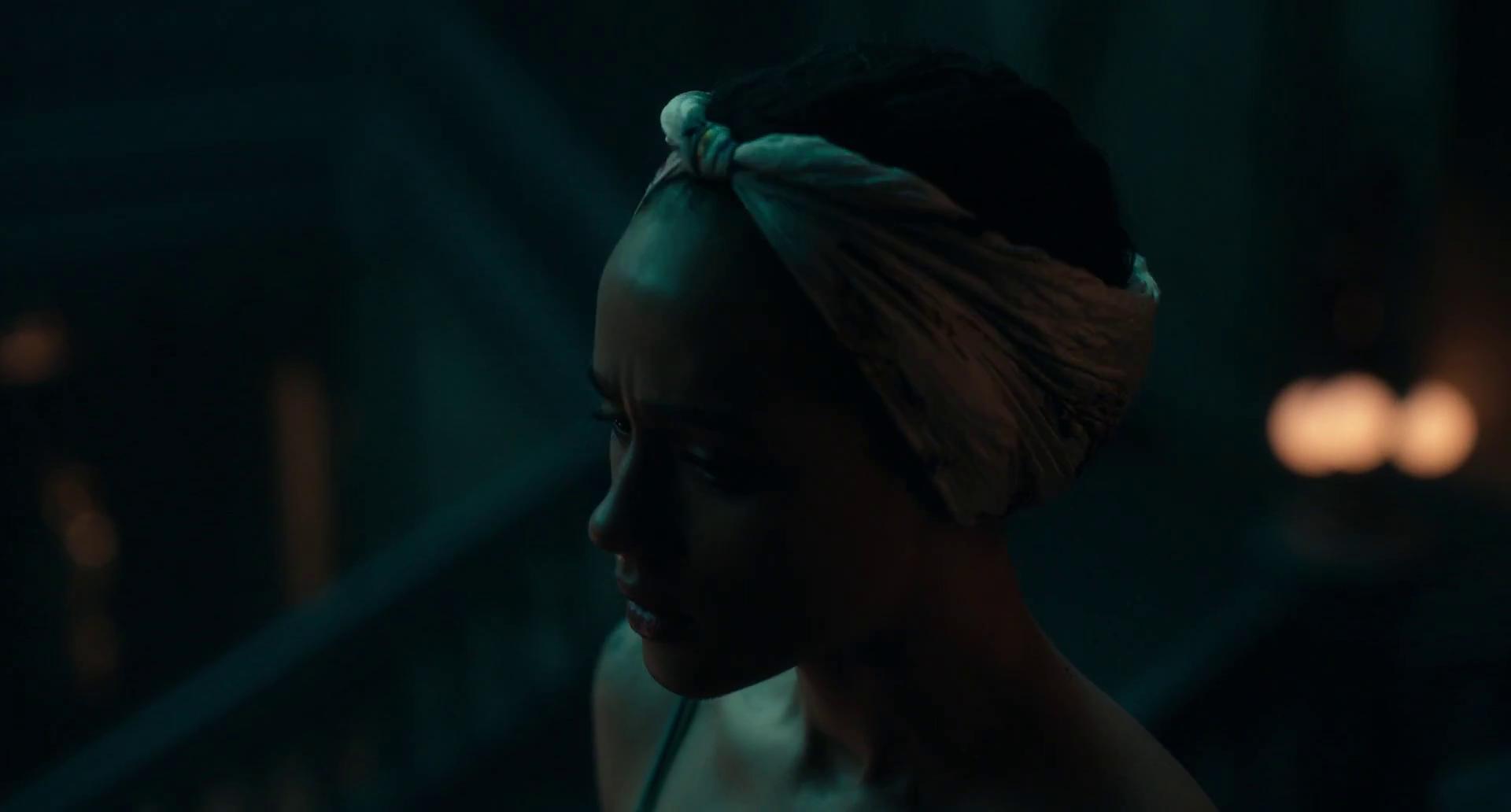 knowing who you are.”). Especially in light of her forebears’ disreputable reputation, which keeps being held up and thrown in her face. And when all Walt’s deferential acolytes start ‘innocently’ encouraging her to refer to him as her lord and master, such presumptuousness must seem all the more galling to her. As she incredulously observes, “Can you imagine being that rich? Just walking around like you own people?” Only to have the spot-on Grace affirm, “Girl, he probably does own people. Wanted to add you to the roster.” It’s this insufferable sense of Anglo-Saxon superiority that ruffles the feathers of black folk like Evie. These vamps consider themselves the next step up in human evolution (“I am a god!”), as outlined in the devil’s bargain Walter tries to get her to agree to: “Think about what you are gaining here. Wealth, power, great strength, life eternal. No more sickness, like your mother had. No struggle, no longer confined by the frailty of human existence. A life of privilege…. Isn’t that what you want?”
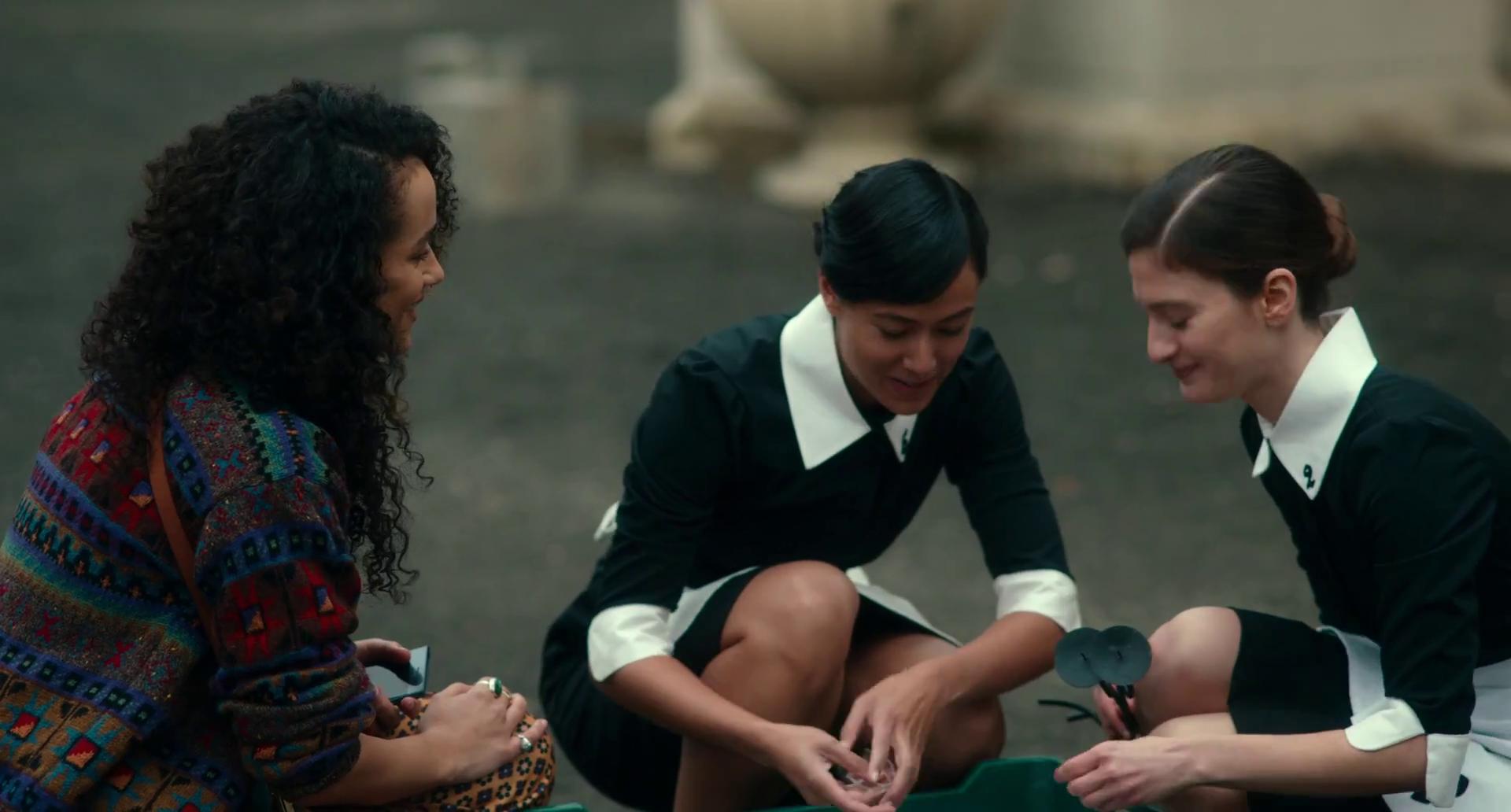 Which is why Evie feels greater affinity with the serving staff when she first arrives, including Carol Ann Crawford’s Judi Dench-like Mrs. Swift, than she does the overlords of the estate. With her own current catering career, and given her people’s ancestral history as domestics and caregivers, maids and mammies, in Western society, Evie’s seemingly the only person with the empathy to see how badly the staff is being treated by Sean Pertwee’s lordly upper butler, Mr. Renfield, who drills them like a martinet, the way Christopher Plummer did his children in The Sound of Music. He likewise disrespects her initially, before discovering she’s a guest for the weekend, rather than another server, as he’d first assumed, based on her skin tone. The immediate bond Evie forms with the help (“If we don’t help each other out, who will, right?”) recalls Kaluuya’s own in Get Out, the gardener and maid there being the only other blacks in the vicinity he felt a connection to. In The Invitation, this bond is made explicit when Walt assures Evie, “For someone of your… background, surely (unholy matrimony to him) is more than a leg up,” before sinking his teeth into the fibula of the helpless maid right beside her.
 To underline the point, the maids here appear to have been specifically cast to represent a cross section of ethnic types. Like Evie herself, this makes them seem equally suggestive of a threatening outside influx, an uptick in unwanted immigration to British shores. As such, they’re also regarded as low-skilled labor to be exploited by companies who can get away with paying them under the table at minuscule wages. In anti-Capitalist propaganda, the titled and aristocratic are frequently depicted as literal bloodsuckers, subsisting off the labor of the proletariat class as if they were beasts of burden. They’re drained to the last drop of their blood, sweat and tears, same as other exploited groups historically have been. And when their bodies are broken by their backbreaking labor and can serve no further purpose, they’re led to the slaughter, like the draught horse on Animal Farm. So, it’s just a slight leap to depict these aristocrats as literally feeding off the help, as they do here. The Invitation seems intent on reviving our oldest fears about decadent, debauched and decaying Old World aristocracies.
 The targeted waitstaff here is shown to be literal prey, blood offerings to sate the dark lord, keeping him well fed, their blood slowly drained to service the needs of their self-indulgent masters. Who, once they’ve drunk their fill, leave the exsanguinated victims stacked in the ice house like cord wood for sloppy seconds. In that glorious red feather dress she wears to her betrothal dinner, Evie herself underlines this demarcation between predator and prey. In her fanning peacock finery, she resembles another pheasant, like the ones those grandly attired lords and ladies wolf down like pigs at a trough, their true animal natures peeking through all the pomp and circumstance, as in that scene of 17th century aristocracy from Neil Jordan’s The Company of Wolves (1984). They consume the spread ravenously, swallowing without even chewing first, like a lampoon from some Soviet agitprop of the ‘30s. To Evie, the sight is grotesque and hallucinogenic, the way innocent new bride Mariette Hartley’s saw her lurid wedding night in Ride the High Country.
 Like the waitstaff, Evie herself represents a melding of several different racial and national identities intended to make ethnic purists uncomfortable. For instance, she’s wearing a backless Beauty and the Beast gold dress gifted her by ‘Walt,’ when she makes her dramatic entrance at the reception. And with her hair styled to the side and an ornamental nose ring in place, she seems purposely done up like a Hindu bride from New Delhi, appropriating the culture to acknowledge the earlier waves of Indian immigration to Britain. To the aged aristocracy, Evie, all ‘sparkly and new,’ seems quite ‘refreshing.’ She presents the prospect of dragging these staunch traditionalists, kicking and screaming, into the 21st century, much as her character is meant to be injecting new blood, literally and figuratively, into their ancient line by presenting the prospect of becoming a breeding vessel (“With so many boys, we thought we were done for.”).
 ‘Out with the old, in with the new.’ Unfortunately, the nourishing new wellspring to be tapped that she represents, also evokes the indigenous lands her ancestors originally hailed from. Those lands that were likewise exploited and raped by imperialists and colonialists of the natural resources they had to offer (“They’re racked with colonial guilt… leopards don’t usually change their spots.”). So, by the time incendiary firebrand Evie is demonstrating her Matrix-style upswoops, it all seems to the purpose of pulling down the historic pillars of aristocratic privilege that have been holding her people in bondage for millennia. Symbolically, she’s burning to the ground the past she’s chained to, insubordinately pursuing a scorched earth policy, like Kerry Washington at the end of Django Unchained (“I hope you all burn.”). Proving you just can’t take black folk nowhere.
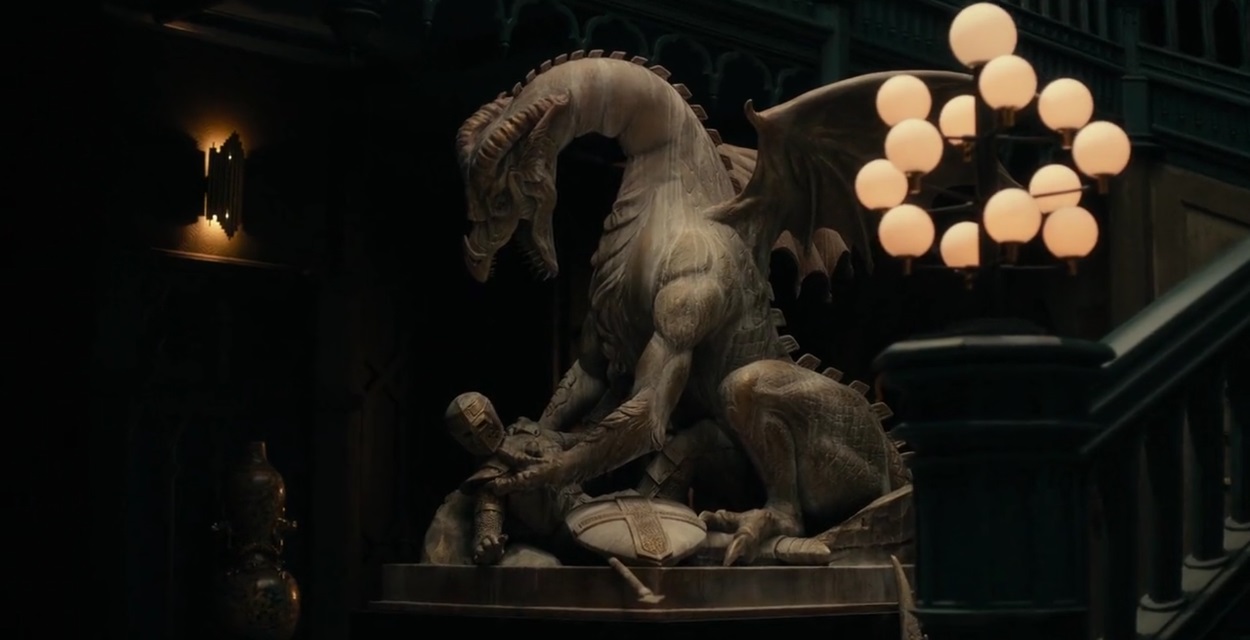 Dribbled on top of it all, there are the disembodied arms and appendages from The Conjuring and The Apparition, clapping on and off, ghostly apparitions and jump scares aplenty. Just to provide the requisite quota of starts the screenwriter’s more sedate story wasn’t properly structured for, one too many of these wrap up with the lead waking from nightmares, that prove none of what we saw was real. There are two (count ‘em) virgin sacrifice scenes, with comely maidens selected from a queued line, being sent to clean dark, dank dungeon-like parts of the house, that are staged in a rather repetitive manner, and end almost identically. And the offing of the first maid, while wearing earbuds so she can’t hear the beast approaching from behind, for some reason, directly recalls the attack on that Walkman-wearing, convenience store clerk in J.J. Abram’s Super 8. The only compelling aspect to be had from any of this is the clever way the monster we only see in fits and starts, becomes suggestive of that enormous stone dragon statue decorating the foyer. In addition, realtor Oliver Alexander (played by Hugh Skinner as the proverbial, silly English ass) seems to be positioned in the Renfield role initially, procuring victims for the master. But then to confuse the issue, we’re introduced to the butler, literally named Renfield.
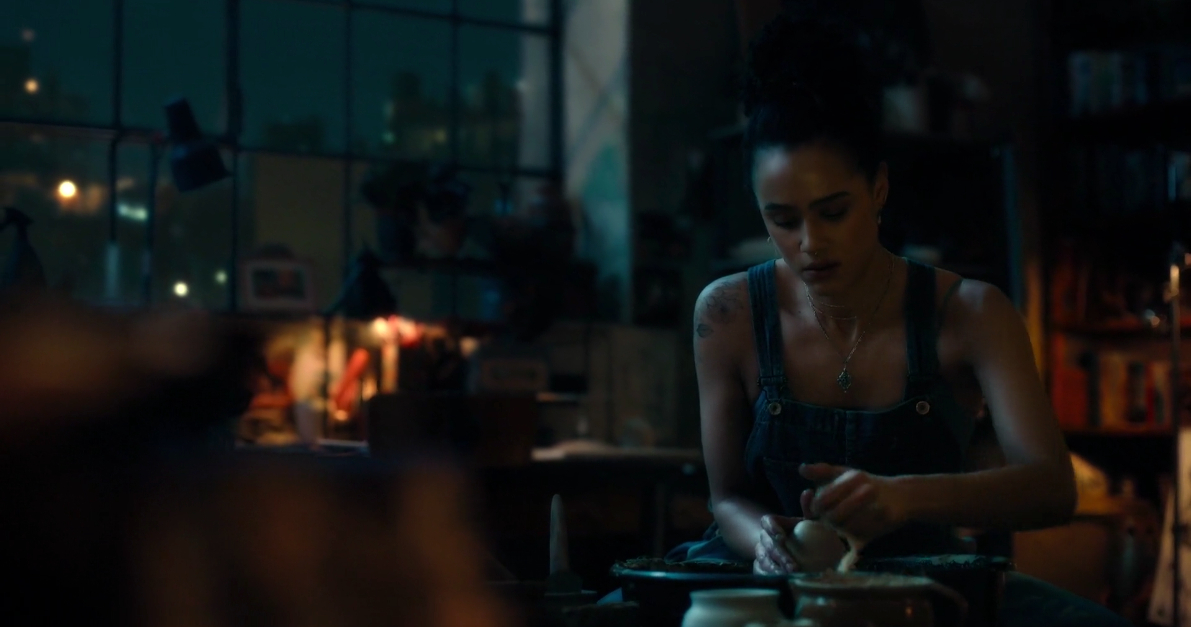 Another scene that’s clearly signaled and prepared for, never comes to pass at all. Learning that Evie makes ceramics, we keep waiting for a reworking of that iconic pottery bit from Ghost to somehow worm its way into proceedings. But we’re just set up for disappointment. And with all the talk about those carnivorous shrikes, birds that actually impale their prey on thorns, the obvious correlation that seems to be intended, with killing vampires with wooden stakes, is never made explicit. Not even at the end when Alana Boden’s agreeably chirpy, little blond Lucy impales both herself and Stephanie Corneliussen’s nasty, tall, dark Viktoria simultaneously, the two women going together, after the story has tried to
  reconstitute Dracula’s trio of brides from Stoker’s original. I guess after Nicholas Hoult’s Renfield went on to reimagine the character as a basket case trying to break free of his co-dependent relationship, it shouldn’t seem too outlandish that The Invitation cast its harem in terms of feminist self-realization, with Evie balking at the thought of being relegated to the third wheel of a throuple (“Three perfect little dolls for the master.”), instead opting for the van Helsing route. The relationship between Evie and self-assertive Grace, in which one always seems to have been shunted into the subsidiary role of the dominant partner’s sidekick, at least until the roles are reversed at the end, isn’t satisfactorily fleshed out either. Though it seems meant to mirror, to some degree, the similar power dynamics between Lucy and Viktoria (“It’s enough. You don’t tell me what to do anymore!”).
 Perhaps most annoyingly, after the ball has dropped, and the entire game’s been given away, it sounds absurd to keep having Evie ask Walt who he is and what’s going on, as if she’d never seen a vampire movie or celebrated Halloween in her life (she’s from across the pond, so there’s no excuse). These foolish lines make this independent-minded, contemporary working girl (“You modern women are so ungrateful,” her dark prince hilariously bemoans), sound like she were some illiterate peasant from the old country herself. From even further back in time maybe,
 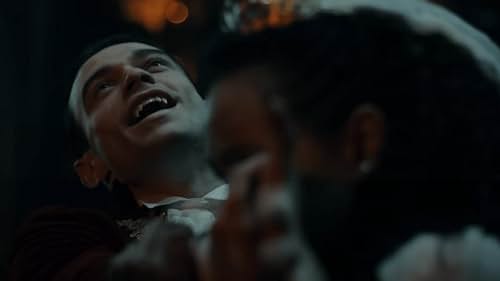 before his invasive new species had ever immigrated over. And while it bodes ill to dwell on dismal plot points, I don’t entirely get the mechanics of her grand plan at the end. Being dead, Walt can’t regenerate his own blood. It’s just recycled from who or whatever he was feeding off the night before, like a water filtration system. So what affords it magical properties? This is probably a question more for Stoker’s original though, where he had Mina gain extrasensory perception from drinking Dracula’s blood. So, I’m sure someone has explained the logic of this somewhere… at some point? The only thing that emerges clearly from such amorphous issues, is that the eternally amusing Walt is enjoying his overeager young bride sucking him dry far more than he ought to be at the end there.
 CRAFT D MOVIE CRITIQUES